.png)


MORE THAN A RACE - RMB’s Decade of Impact on University Rowing
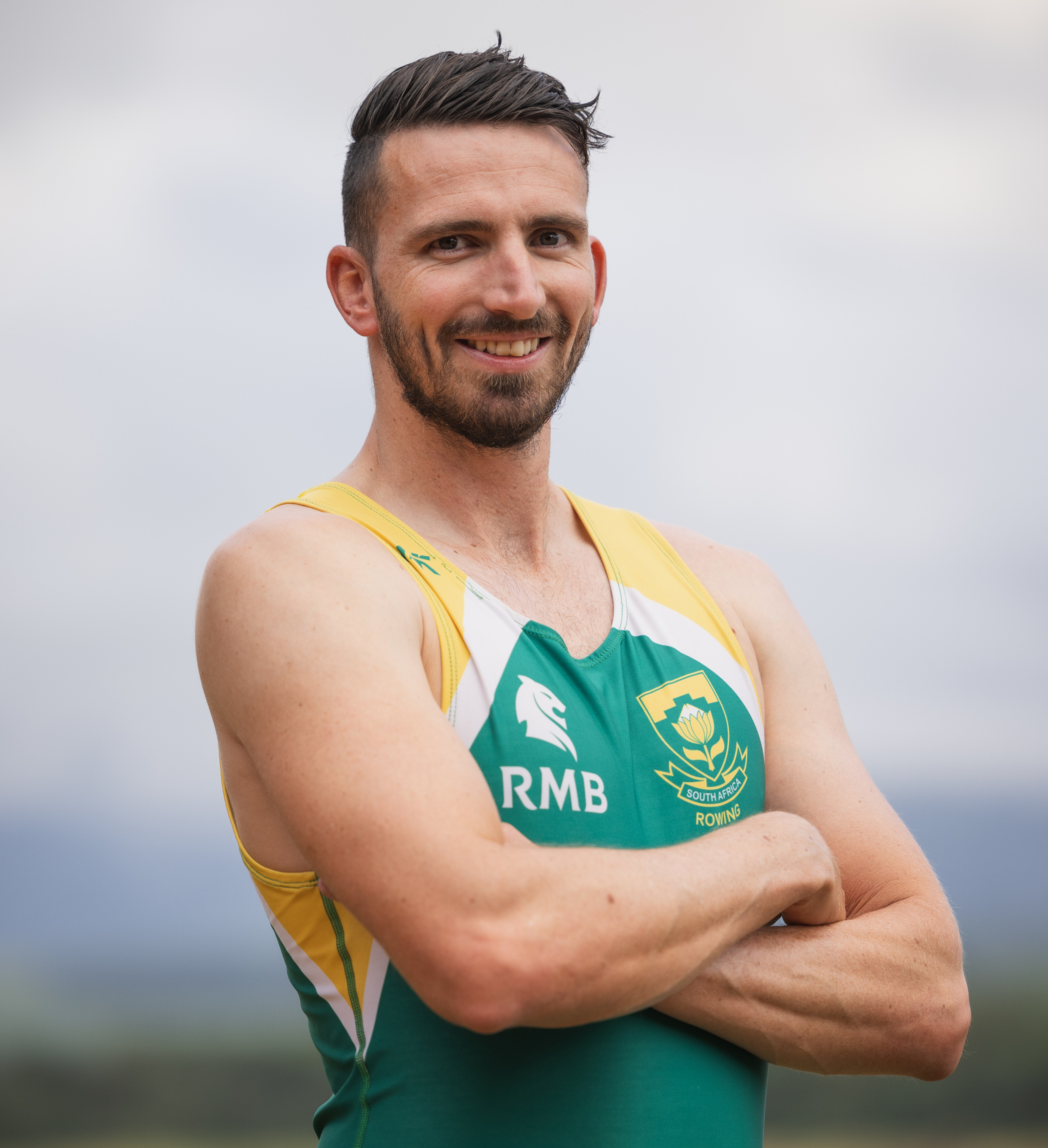
FOR JOHN SMITH, rowing has always been about more than what happens on the water.
It is about the people you train alongside, the standards you set, the culture you build and, ultimately, the opportunities created for those who follow. That is why, as RMB marks ten years of involvement with the University Boat Race, Smith sees the partnership as something considerably bigger than a sponsorship.
From a Chance Encounter to an Olympic Career
He has lived much of rowing’s modern South African story himself. An Olympic champion, Smith began his sporting journey in middle-distance running before trying water polo at St Albans College. When an unfortunate encounter with an opponent left him reconsidering his swimming career, he found rowing.
He quickly discovered one of the sport’s simplest principles: the more you train, the better you get.
That philosophy would shape his career. At university, Smith had options, including the University of Johannesburg, which already had considerable rowing heritage. But a training session with the Tuks eight changed his mind. He was invited to fill in as a spare while still at school and found himself surrounded by some of the country’s most promising young rowers.

Matthew Britton, James Thompson and Shaun Keeling were among those in the group.
Smith realised he wanted to be part of that environment.
“At that stage, those were the young guys that were really good,” he recalls. “I thought, I have to surround myself with these guys.”
The Victory That Changed Tuks Rowing
The decision proved significant. When Smith arrived at Tuks, the men’s eight had yet to win the University Boat Race. In 2009, that changed. Smith and his teammates returned from the World Championships and helped deliver Tuks’ first victory.
It was the beginning of an era.
Success brought confidence, greater support and, crucially, a culture in which athletes wanted to be part of the team. According to Smith, Tuks went on to dominate the men’s eight for many years, winning around 10 consecutive races.
The significance of those victories was not simply measured in trophies. Winning established expectations. New athletes arrived knowing what the club wanted to achieve, and they inherited a culture built around training, accountability and excellence.
Smith remains proud of having been part of that foundation.
“Looking at when it started, we had like one or two boats and it was in like half a shed,” he says. “And through winning, the university then obviously supports you and backs you and helps you grow the club.”
Why Investment Matters in a Sport Built on Equipment
That growth matters because rowing is an expensive sport. Boats can cost hundreds of thousands of rand, making investment essential if athletes and clubs are to progress.
This is where Smith believes corporate support can have an impact that is easy to miss.
RMB’s decade-long involvement, he says, has helped provide not only financial backing but a sense of belonging and credibility. Athletes can look around and know that a major organisation is standing behind them.
“There’s like that sense of pride that you can be associated with a brand like that,” Smith says. “It’s a team relationship.”
For Smith, that relationship is particularly meaningful because of what it can make possible.
“Look who’s in our corner,” is how he describes the feeling.
Creating Opportunities Beyond the Boat Race
But the partnership’s impact extends beyond the headline university race. Smith points to the way backing can help put people in boats who might otherwise never have had the opportunity. It can support athletes pursuing ambitions that eventually take them to the highest level of international sport.
“There’s no doubt that they’ve made dreams come true,” he says.
That impact also reaches into development and school rowing. Smith recalls his own involvement at Germiston High, where he helped support rowers and mentor coaches. He witnessed the programme produce a significant result, with Germiston earning a medal at the Schools Head of the River.
For Smith, the achievement demonstrated what can happen when a rowing community gets behind a programme operating against the odds.
Breaking Down Rowing’s Traditional Barriers
Rowing has traditionally been viewed as an affluent sport, making the growth of programmes in different communities especially significant. Smith believes diversity is increasing and participation is growing year on year.
The university scene, meanwhile, has become increasingly competitive.
Tuks dominated the men’s competition for a long period, but Smith has welcomed the emergence of other universities. UCT, for example, has experienced a resurgence in the men’s event, demonstrating that success can come from different programmes when athletes and coaches combine hard work and dedication.
The Rise of Women’s University Rowing
The women’s competition provides another example of how the sport has evolved.
Smith remembers a time when the Tuks women were not as prominent as the men. Today, he says, the women’s eight has become the club’s top-performing boat and has established itself as a force in the competition.
For him, that is one of the most impressive developments of all.
When Smith was competing, many of the athletes representing Tuks were also national-team rowers. They were students, but they were simultaneously part of South Africa’s elite rowing system. Today, the strength of the university clubs is increasingly being demonstrated by athletes who have developed within those clubs themselves.
That evolution is important because it points to a sustainable future for the sport.
From a Quiet University Race to a Major Sporting Occasion
So too does the growing profile of the University Boat Race itself.
Smith remembers competing when the event was comparatively low-key. There was no television coverage. Parents and university representatives were the people behind the cameras. Athletes raced, their supporters watched, and the wider sporting public largely remained unaware.
That has changed.

The event has become a genuine sporting occasion, with growing interest, online coverage and television exposure. For Smith, the increased visibility gives athletes something they deserve: a platform on which their year of preparation can be recognised.
“It’s doing the sport justice,” he says.
The Rivalry That Makes the Race Special
The University Boat Race has also retained something that Smith considers fundamental: rivalry.
Every year, athletes return to the water carrying the identity of their university with them. Smith compares it to supporting a football team. The moment the jersey goes on, allegiances are renewed.
And despite having won Olympic gold, he never regarded the University Boat Race as an inferior competition.
Smith remembers returning from the Olympics and racing in the Boat Race with the same hunger and nerves he had experienced on the biggest international stage.
Whether it is an Olympic final or a university race, he says, the premise remains the same: you line up, compete and try to win.

No Shortcuts: Every Seat Has to Be Earned
That mentality also explains why Olympic status does not guarantee a place in a university crew.
Smith recalls a national athlete returning from the Under-23 World Championships only to discover that a local rower had trained harder and earned his place in the boat.
There were no special concessions.
“You had to earn your way into the boat,” Smith says.
That principle remains at the heart of his view of rowing: talent matters, but effort, discipline and the people around you matter just as much.
A Decade of Impact - and a Legacy Beyond Sponsorship
It is also why he believes RMB’s involvement over the past decade is significant. Sponsorship can put a name on an event, but its deeper value lies in what happens away from the branding - the boats purchased, the athletes supported, the coaches developed, the programmes strengthened and the dreams that become attainable.
As the University Boat Race heads towards another chapter, Smith is eager to be there.
Port Alfred, he says, holds a special place in South African rowing and has become a blue-ribbon event on the university sporting calendar. With RMB celebrating ten years of involvement, he expects the occasion to be even more special.
“I need to be there,” he says. “I don’t know what I need to do, but I need to be there.”

The Real Measure of Success
That enthusiasm perhaps captures the partnership better than any statistic.
After a decade, RMB’s role is not simply about backing a race. It is about backing a sport, its athletes and the culture that surrounds them — helping turn university rowing from a relatively quiet contest into an event with ambition, visibility and a growing ability to create opportunities.
For Smith, that is the real legacy: not simply who crosses the finish line first, but who gets the chance to reach the starting line in the first place.


Comments